

AI SEO
How AI is Changing The Market Today
AI Search Engine Optimization
Lorem ipsum dolor sit amet, consectetur adipiscing elit. Ut elit tellus, luctus nec ullamcorper mattis, pulvinar dapibus leo.
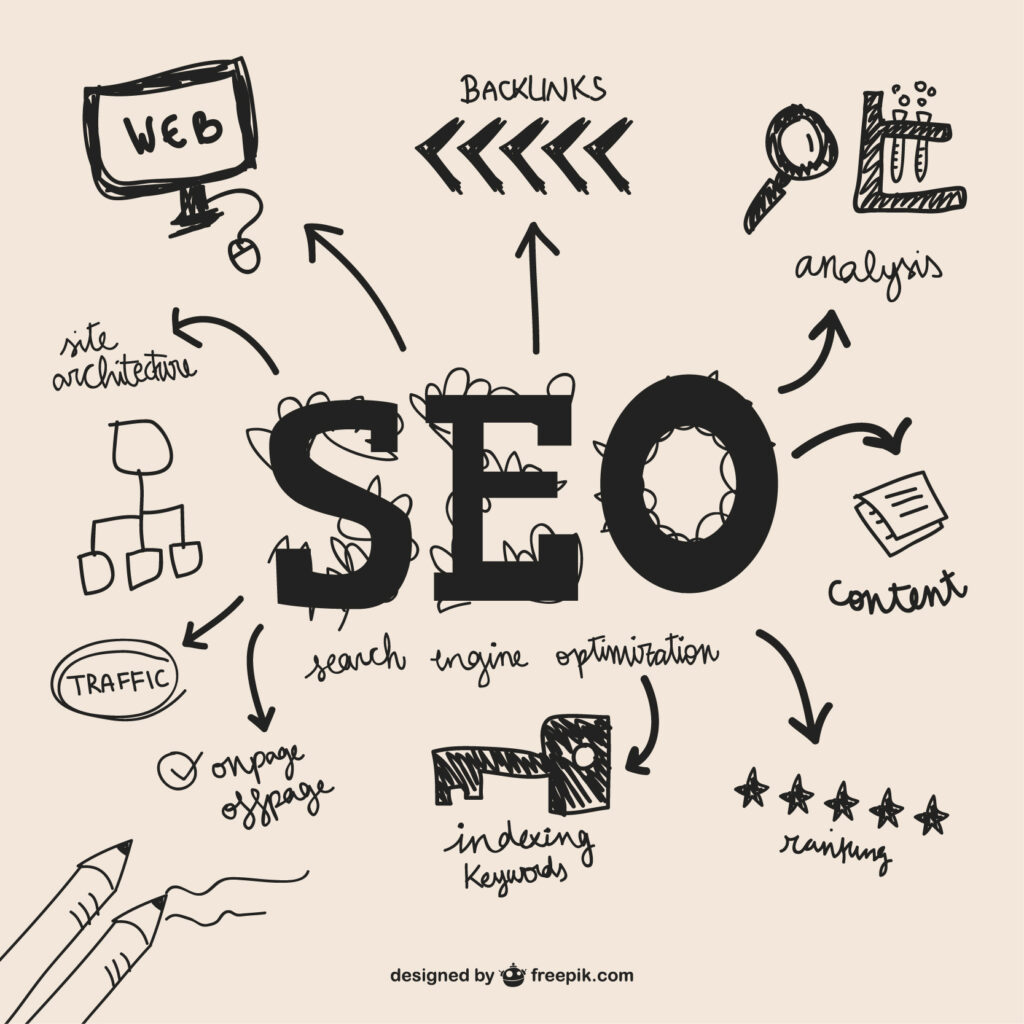
AI SEO Updates
AI’s New Strategy on SEO – What Has Changed?
AI is built within all new search engines. What YOU need to know is how you can utilize this machine to help your market.
How Does AI Exist in the Market of SEO
AI has transformed SEO by changing how businesses reach and understand potential customers online. Instead of relying only on traditional keyword targeting and search rankings, AI-driven SEO focuses on analyzing user behavior, intent, and context. Search engines now use AI to understand what users are looking for, why they are searching, and which content provides the most valuable answer. This shift has made SEO less about matching keywords and more about creating relevant, trustworthy, and useful information that connects with real customer needs.
Modern AI-powered SEO also supports a smarter go-to-market approach by identifying digital signals across search activity, online conversations, website engagement, and customer interactions. AI systems can recognize when someone is actively looking for a solution, allowing businesses to create personalized content and reach audiences at the right moment. This moves away from generic outreach and toward intent-based strategies where brands become part of conversations already happening.
As AI continues to reshape search, businesses must focus on originality, expertise, and customer value. Recent search updates emphasize Information Gain, rewarding websites that provide original research, unique insights, direct experience, and meaningful data instead of content that simply repeats existing information. AI does not replace SEO—it raises the standard. Companies that combine AI-driven insights with strong content strategies can improve visibility, generate higher-quality leads, reduce acquisition costs, and build stronger relationships with their audience.

The New Rules of SEO: AI Search, Information Gain, and Visibility in 2026
AI’s New SEO Strategy in 2026: Information Gain, AI Search, and What Has Changed
Google’s March 2026 Core Update, which rolled out from March 21 through June 2, has significantly reshaped how websites are evaluated and ranked. At the center of the update is the concept of Information Gain, a framework designed to reward original insights and discourage content that simply repeats information already available online.
Using Gemini-powered semantic filters, Google now evaluates whether a page contributes new information to a topic. Websites that merely summarized the top ranking search results without adding original research, unique data, expert quotes, or real world case studies experienced substantial ranking declines. Studies following the update found that approximately 24.1% of pages previously ranking in the top 10 positions dropped out, while websites publishing proprietary research and original findings saw visibility increase by as much as 22%.
The Rise of Original Sources and Native Authority
One of the most significant shifts is Google’s focus on disintermediation. Aggregate websites, directories, affiliate roundups, and middleman-style content are being demoted in favor of direct-source entities. This means Google increasingly prefers the original creator, brand, service provider, or organization closest to the source of the information.
If your business owns primary data, provides the service directly, or publishes original reporting, Google is more likely to view your domain as the authoritative source for relevant queries. At the same time, authority signals are becoming more topical. Links from websites with established expertise in a specific niche carry greater weight than generic high-authority backlinks.
Google is also relying less on written claims alone and increasingly verifying information accuracy through multiple data sources and entity relationships across the web.
AI Search Is Changing Click Behavior
Traditional blue-link rankings continue to lose visibility as AI-generated search experiences expand. Recent data suggests that websites ranking in the number one position now appear within AI Search Summaries only about 31% of the time.
When AI-generated answers satisfy the user’s query directly, click-through rates to traditional search listings can decline dramatically. Some studies have reported CTR reductions approaching 58%, making AI optimization a critical component of modern SEO strategy.
Additionally, blue links have been pushed lower in search results and, in many cases, hidden behind the “Web” tab, resulting in fewer opportunities for users to engage with traditional organic listings.
Content Depth Matters More Than Ever
Google’s May 2026 updates introduced more advanced Natural Language Processing (NLP) capabilities. Instead of rewarding pages that simply target keywords, Google now evaluates topic completeness, contextual relevance, and whether a page thoroughly addresses follow-up questions users may have.
To compete, content must:
- Provide direct definitions and explanations.
- Address the “why” behind a topic.
- Include structured follow-up answers.
- Demonstrate expertise through original analysis.
- Match search intent with precision.
Exact-match keyword strategies are becoming less important as semantic relevance and topical depth continue to gain influence.
Unoriginal AI Content Faces Increasing Challenges
Google has not banned AI-generated content. However, the search engine has become more effective at identifying low-value content created with little human input or originality.
Pages generated primarily through large language models that offer no unique insights, research, or expertise are increasingly filtered out of rankings and AI citations. Human editing, original analysis, and subject matter expertise remain essential.
Technical SEO for AI Search
Google is also simplifying how content is processed and understood by AI systems.
The company is placing greater emphasis on:
- Clean website architecture.
- Standard schema markup.
- Fast page performance.
- Easily accessible information.
Less common structured data implementations are becoming less important as Google prioritizes schema formats that are easier for AI systems to interpret.
Performance metrics are also gaining importance. Google’s guidance increasingly points toward maintaining an Interaction to Next Paint (INP) target below 150 milliseconds and keeping HTML page size under 2MB whenever possible.
Large pages that exceed the 2MB threshold may not be fully processed by Retrieval-Augmented Generation (RAG) systems. If important findings appear near the bottom of oversized pages, AI systems may never reach them.
For this reason, businesses should place their most valuable insights, statistics, and conclusions near the top of their content to maximize visibility and prevent truncation issues.
Strong Domains No Longer Guarantee Rankings
Another major change is Google’s shift away from evaluating websites primarily at the domain level.
Historically, strong domains could help weaker pages rank through overall authority. In 2026, Google is increasingly evaluating pages based on their individual semantic value and usefulness.
This means:
- Strong domains cannot rely on site-wide authority alone.
- Weak pages are more likely to lose visibility.
- Individual content quality matters more than ever.
- “Parasitic SEO” strategies have become significantly less effective.
Many established websites are experiencing ranking declines despite maintaining strong overall domain authority.
New Search Console Reporting for AI Visibility
In June 2026, Google introduced Search Generative AI Performance Reports within Search Console.
The new reporting tools allow website owners to better understand their visibility within AI-powered search features by providing data on:
- Impressions
- Pages
- Countries
- Devices
- Dates
- Overall AI search performance
This marks one of Google’s first major steps toward giving publishers direct insight into how AI-generated search experiences impact website visibility.
New Spam and User Experience Enforcement
Beginning June 15, 2026, Google officially classified “Back Button Hijacking” as a malicious practice. Websites that prevent users from returning to search results or redirect users to unrelated advertising pages may face penalties, with site owners held fully responsible for implementation.
What SEO Success Looks Like in 2026
The biggest lesson from Google’s recent updates is clear: AI search rewards originality, expertise, and direct answers.
Success now depends on:
- Publishing original reporting and research.
- Creating non-commodity content.
- Demonstrating real-world expertise.
- Structuring content for AI understanding.
- Matching search intent precisely.
- Providing unique information users cannot find elsewhere.
Instead of optimizing for exact-match keywords, businesses must focus on semantic relevance, topical authority, and information gain. The websites that contribute something genuinely new to the conversation are increasingly the ones Google chooses to surface, cite, and rank.
Get Started with Atlas Studios
Harness the power of streaming advertising to amplify your brand. Atlas Studios helps companies in Providence, Boston, New York City, Philadelphia, Washington D.C., Austin, Dallas–Fort Worth, Raleigh-Durham, Charlotte, Nashville, Phoenix, Seattle, Miami, and Orlando launch targeted streaming campaigns that deliver measurable results.
Contact Atlas Studios today for a consultation and unlock the full potential of streaming advertising for your business.
FAQ'S
FAQs About Streaming Advertising & Working With Us
Streaming advertising delivers video or audio ads through platforms like Hulu, Netflix, YouTube, and Spotify. Ads are integrated into content and targeted using audience data for maximum engagement.
We execute campaigns across Hulu, YouTube, Paramount+, Roku, Apple TV+, Netflix, Spotify, Pandora, ESPN+, Peacock, and more.
We use first-party, third-party, and lookalike data, as well as geo-targeting, demographic profiling, and content creator targeting to reach the most relevant viewers.
Yes. Streaming advertising can be geo-targeted for specific cities and regions or scaled nationwide depending on your business goals.
We track impressions, engagement, conversions, and offline attribution, tying ad exposure to real-world outcomes like site visits, form fills, or in-store purchases.
We offer end-to-end services: strategy, creative production, campaign execution, data integration, and advanced attribution—ensuring transparency, efficiency, and measurable ROI.
Yes. Our campaigns use privacy-first targeting methods, cookieless attribution, and secure data integrations with partners like LiveRamp to ensure compliance and consumer trust.
No. Streaming campaigns can be tailored to your budget, starting small with targeted audiences and scaling as you see measurable results.
Any brand seeking meaningful digital reach, including retail, healthcare, entertainment, education, government services, and B2B enterprises.
We use geo-fencing and DMA-based targeting to pinpoint viewers in specified cities and neighborhoods.
Yes, streaming offers lower CPM costs, better targeting, and precise performance tracking.
Yes, from concept to post-production, our team crafts compelling streaming-specific video and audio ads.
Impressions, completion & click-through rates, conversions, cross-device attribution, engagement duration, and ROI.
Our Expertise
At Atlas Studios, we combine AI-driven intelligence, strategic go-to-market planning, and automated execution to build demand systems that perform. Our team designs and manages AI-powered lead generation and buyer engagement programs that help businesses identify intent, start conversations, and convert prospects into real revenue.
We don’t rely on static lists or outdated outreach. Our expertise lies in activating AI to detect real buying signals, personalize engagement at scale, and continuously optimize performance across channels.
AI Buyer Intent Detection & Qualification
Multi-Channel Go-To-Market Strategy
Personalized Outreach & Conversation Automation
End-to-End Lead Generation & Pipeline Management
Why AI Go-To-Market Is Essential for Your Business
Engage Buyers at the Moment of Intent:
AI identifies when prospects are actively searching, asking for recommendations, or signaling purchase readiness—allowing you to engage before competitors do.
Precision Targeting Beyond Demographics:
Reach prospects based on behavior, context, industry, role, and real-time activity—not just age or location.
Cross-Channel Reach:
Engage buyers across LinkedIn, email, social platforms, search behavior, websites, and digital conversations.
Real-Time Learning & Optimization:
AI systems continuously adapt messaging, timing, and targeting based on response data and engagement signals.
Higher Efficiency & Lower Cost Per Lead:
Automated qualification and follow-up reduce wasted outreach and improve conversion rates.
Scalable & Privacy-Conscious:
AI-driven engagement respects modern privacy standards while delivering highly relevant interactions.
Our AI Go-To-Market & Lead Generation Services
Atlas Studios delivers end-to-end AI-powered go-to-market solutions designed to generate demand, qualify leads, and accelerate pipeline growth.
AI Intent Monitoring & Buyer Discovery
We deploy AI systems that monitor digital conversations and behavior to identify active buying signals.
Detection of intent across LinkedIn posts, comments, groups, and discussions
Monitoring of search behavior, content engagement, and website activity
Identification of prospects requesting referrals, recommendations, or solutions
Prioritization of high-intent opportunities based on likelihood to convert
AI-Powered Outreach & Engagement
Turn intent signals into personalized, timely conversations—automatically.
AI-generated, context-aware email and social outreach
Personalized messaging based on the original post, behavior, or inquiry
Human-like follow-ups and adaptive response handling
Multi-touch engagement across email, LinkedIn, and messaging platforms
Automated Lead Qualification & Appointment Setting
AI doesn’t just find leads—it moves them forward.
Intelligent response handling to answer questions and objections
Automated scheduling synced with your calendar
Qualification scoring before handoff to sales
Seamless transition from AI to human sales teams
Campaign Strategy & Go-To-Market Planning
Every AI system we deploy is built on strategy—not automation alone.
Market research and competitive analysis
Ideal customer profile (ICP) and buyer persona development
Messaging frameworks aligned to buyer intent stages
Integration with existing sales and marketing systems
Performance Optimization & Intelligence
AI systems improve continuously—so your results do too.
Performance dashboards showing engagement, response, and conversion rates
A/B testing of messaging, timing, and targeting
Funnel optimization from first signal to booked appointment
Ongoing refinement based on real-world buyer behavior
AI Go-To-Market for Key Markets
Atlas Studios builds AI-driven demand systems tailored to both national and regional markets, including:
| City / Market | AI Targeting Focus |
|---|---|
| Providence, RI | Local professional services and regional buyers |
| Boston, MA | Tech, academic, corporate, and B2B services |
| New York City, NY | Enterprise, multilingual, and multi-industry targeting |
| Philadelphia, PA | Healthcare, industrial, and professional services |
| Washington D.C. | Government-adjacent, advocacy, and consulting firms |
| Austin, TX | Startups, SaaS, and creative industries |
| Dallas–Fort Worth, TX | Multi-location and enterprise outreach |
| Raleigh-Durham, NC | Education, research, and technology sectors |
| Charlotte, NC | Financial services and growing business hubs |
| Nashville, TN | Healthcare, creative, and emerging businesses |
| Phoenix, AZ | Regional growth and seasonal targeting |
| Seattle, WA | Tech-forward and sustainability-focused companies |
| Miami, FL | Multilingual, lifestyle, and service-based businesses |
| Orlando, FL | Tourism, events, and B2B services |
How AI Go-To-Market Works
AI-powered go-to-market systems operate across the platforms and signals buyers already use:
LinkedIn posts, comments, and discussions
Email engagement and response behavior
Website visits and content interactions
Search behavior and digital research signals
Social conversations and industry forums
AI analyzes these signals in real time, generates personalized outreach, manages follow-up conversations, and schedules appointments—creating a continuous, automated demand engine.
Driving Results with Atlas Studios
Transparent dashboards tracking intent signals, outreach, and conversions
Cross-channel attribution from first signal to booked meeting
Dedicated strategists overseeing AI system performance
Ongoing optimization to improve lead quality and pipeline velocity
Tight alignment between AI engagement and your sales process
Atlas Studios AI Service Offerings
Market & Buyer Research
Understand who your buyers are, where intent appears, and how decisions are made.
AI System Strategy & Deployment
We design, configure, and launch AI-powered go-to-market engines.
Performance Outreach & Engagement
AI email and social messaging
Conversation automation
Appointment scheduling
Analytics & Reporting
Clear reporting that ties AI activity directly to pipeline and revenue.
Reaching Buyers in a Privacy-Focused World
Atlas Studios builds AI engagement systems that are compliant, respectful, and effective.
Context-based intent targeting (not invasive tracking)
First-party data utilization where applicable
Ethical AI engagement frameworks
Platform-native compliance across LinkedIn, email, and social networks
Why Choose Atlas Studios?
26+ years in digital marketing, branding, and web development
Deep expertise in AI-driven demand generation
Full-service execution—from strategy to automation to optimization
Proven regional and national go-to-market experience
Commitment to transparency, performance, and long-term growth
Get Started with Atlas Studios’ AI Go-To-Market Solutions
Stop chasing cold leads. Start engaging buyers who are already looking.
Whether you’re targeting Providence, Boston, New York City, Philadelphia, Washington D.C., Austin, Dallas–Fort Worth, Raleigh-Durham, Charlotte, Nashville, Phoenix, Seattle, Miami, Orlando, or beyond—we build AI-powered go-to-market systems that identify intent, create conversations, and drive revenue.
Contact us today for a free consultation and custom AI go-to-market strategy.
Atlas Studios. Intelligent. Strategic. Revenue-Focused AI Go-To-Market.
Find buyers sooner. Engage smarter. Scale faster.